

 My Cart
 My Account
 Gift Certificates
 Find Us

Meet Our Neighbors: Rod Rodgers Dance Company & Rachel Lubell
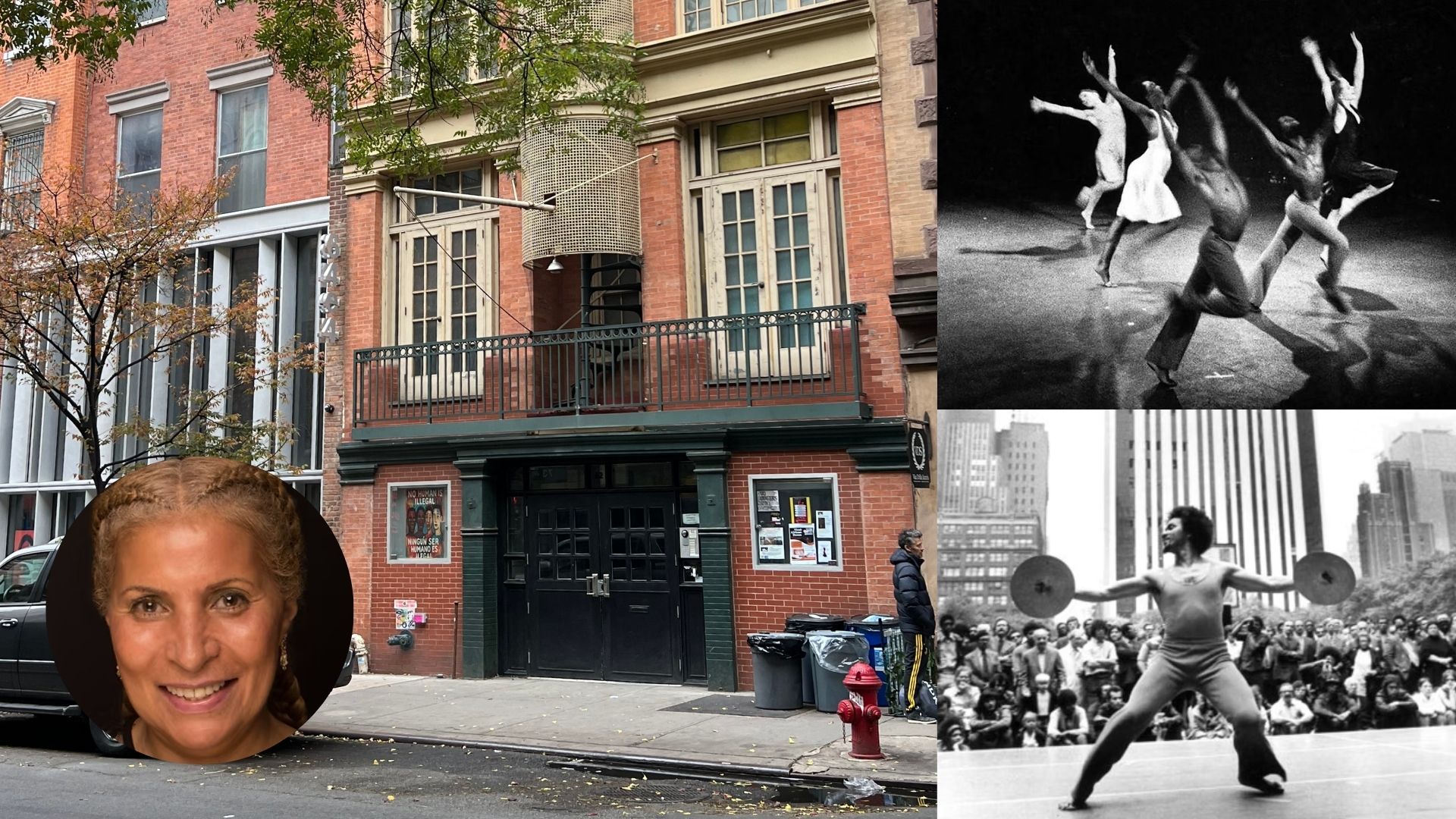
For those who have never been to E 4th St, the city’s famous “Fourth Arts Block,” tucked amidst a handful of theatres and shops sits Rod Rodgers Dance Company (RRDC). Founded in the 1960s by esteemed dancer and teacher Rod Rodgers, the legacy of the company’s founder is carried on by its current dancers and leadership, including Artistic Director Kim Grier-Martinez and General Manager Rachel Lubell, the latter of whom told me her story as part of the company on a busy Thursday this fall.
***
Rachel and I sat down in the studio office, just through the lobby and past the company’s ‘thrift store,’ a rack full of secondhand clothes and costumes for sale. On a typical weekday afternoon, Rachel can be found here in the office or around the building, juggling the comings and goings of those stopping by the space for classes, rentals, and events.
Like these community members, Rachel was once just an attendee at one of RRDC’s classes.
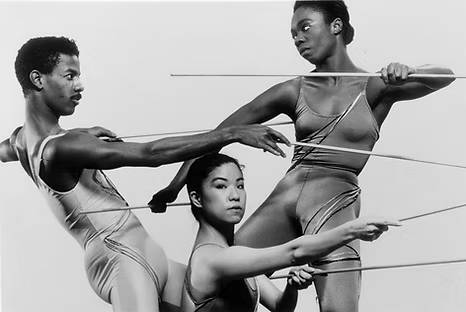
“Tangents” (1968), one of Rod Rodgers’ iconic “Rhythmdances,” which incorporate theatrical movement with percussion.
Rachel Meets Rod Rodgers
“I met Rod Rodgers when his studio was still on 12th Street, the West side, before he came here,” Rachel begins. “I went there and took a couple of classes and met a woman who was in my position at that time, Kathy Rothschild—she’s still on our board now. They had a class called Reggae’cise. Imagine that back in the 80s!” Rachel tells me she shortly then moved to the Caribbean, to St. Thomas, U.S. Virgin Islands. She jokes, “Then I really got to do Reggae’cise.”
One day, Rachel heard that Mr. Rodgers was coming to perform at the only performing arts center in St. Thomas. “I worked at the television station then, and they would always interview the artists that came to the arts center. So, he came up to the television station.”
There, Rachel and Mr. Rodgers reconnected, and he heard of her plans to move back to New York. He insisted she come work for him at his new studio on E 4th St, or at the very least, come visit.
“Now we’re in 1988, and I came back to New York.” After Rachel worked a couple jobs in television and on Wall Street, “the same Kathy Rothschild who had been working with Rod on 12th Street told me, ‘You know, Rod needs somebody.’
“So, I came here,” to the new studio, “and he said, ‘Are you here for the audition?’ They were having auditions for dancers. I said, ‘Is there anything else going on?’ He said, ‘Well, I need an administrative assistant in the office.’
“I said, ‘When does it start?’
“He said, ‘Right now.’”
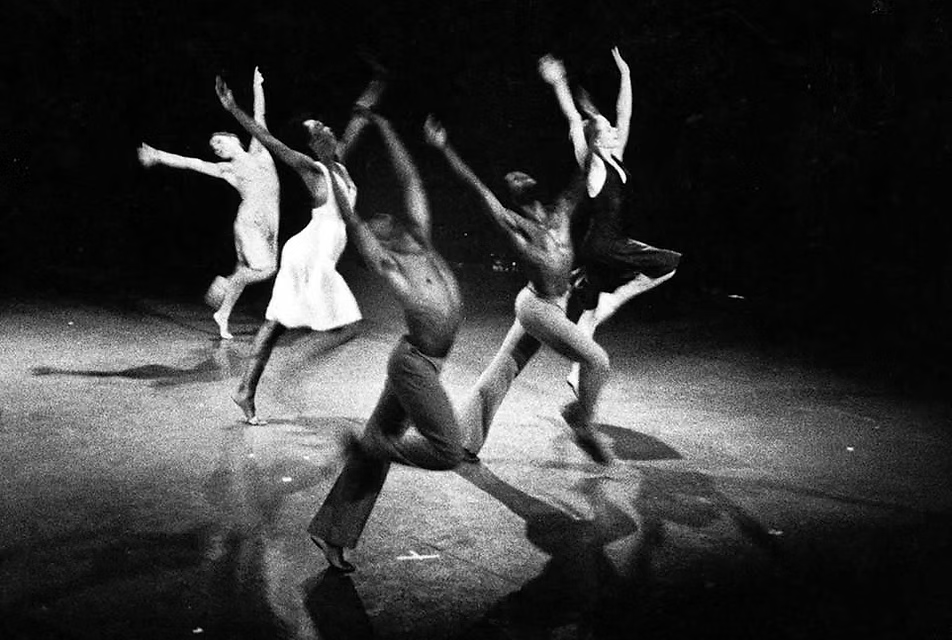
“The Legacy” (1984), part of “Poets and Peacemakers”
The Vision of Mr. Rodgers
Once Rachel started in her new role, she and Rod started talking about everything, from life to the work of the company.
“He would talk about his vision. One of his visions was to use his artistry and his creativity to make people aware of what’s going on in the world: social commentary, social justice,” Rachel explains. “In the beginnings of his company, he was teaching at colleges and doing workshops, and he thought, ‘Why are there not enough students here?’ And he looked outside, and they were all protesting. And he thought, ‘That’s what I should be doing.’”
Mr. Rodgers’ upbringing and exposure to various dance styles deeply informed his own practice. “Rod’s parents were Vaudevillian,” Rachel tells me. “They were Black, and were in a circuit called ‘the Chitlin’ Circuit,’ because everything was segregated then.” As a kid, Rod traveled all over the country with his parents, dancing with them and gaining exposure to different dance styles. In particular, he fell in love with both modern and ballet.
“When he realized that he could use dance as a way to give a voice to people, to issues, he took it up and he started doing pieces that were based on historical Black people.” This is symbolized best in the company’s famous series, “Poets and Peacemakers,” which includes their 1981 piece for Langston Hughes titled “Langston Lives!” and their 1984 piece “The Legacy” inspired by Martin Luther King, Jr.
“He also had the vision that he wanted to share the space with artists that didn’t have a space,” Rachel says. “And that became very important to him. I never really understood that. I mean, I did, but I didn’t really understand until COVID. People still needed space, because you can’t do tap or flamenco or drumming in your house. So, small groups—like two drummers, or four dancers—came here, and I realized this is really important, helping artists out.”
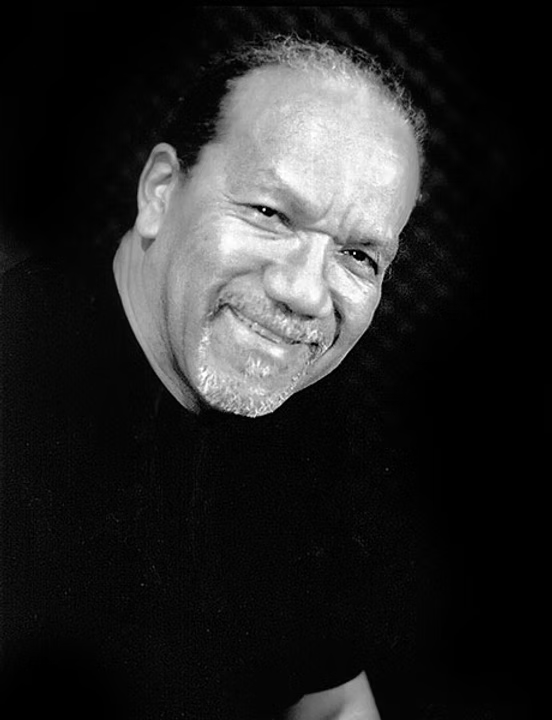
Rod Rodgers passed away on March 24th, 2002.
The Company After Mr. Rodgers
Rachel eventually left the company, but she quickly found herself coming back.
“Rod got sick right after 9/11. I think that really helped stress him out. We were right at the red zone here. At that time, I was working at American Express.” While Mr. Rodgers was in the hospital, his successor Kim and his son Jason asked Rachel for some on-and-off help.
Meanwhile, layoffs began in Rachel’s corporate office. “I made it into the new year. Then around March, Rod was still in the hospital, and I called Kim and I said, ‘Kim, I got laid off.’ She said, ‘Oh, good.’ I said, ‘What?’ And his son, too, said, ‘Oh, good. Why don’t you come back to work full time?’”
Rod Rodgers passed away on March 24th, 2002. With Rachel back at RRDC, the team worked to continue to achieve his vision. And it’s the same team still today: Kim as Artistic Director, Rachel as General Manager, and Jason as the semi-retired Executive Director and board member.
“I couldn’t do it without Kim because I can’t even remember choreography, and I guess she couldn’t do without me, because I do the business part. We’re a good team.”
In addition, RRDC has found new supporters and collaborators within the community that immediately surrounds them. After a few of their original board members passed during the pandemic, the team started forming connections with their neighbors in the East Village. Their board now includes Ayo Harrington, who connected with Rachel while her grandchild participated in the company’s youth program, and Michael Atkins, who is a member of the neighborhood’s CLT board.
“We have a community of people that help. It’s just enough.”
Recently, community members and collaborators came together to refurbish the back patio space of the studio. “That’s something that Rod wasn’t even here to know happened,” Rachel remarks. “But I think about the fact that if it wasn’t for him, none of this would be. I keep that in mind all the time, and it keeps me grounded.”
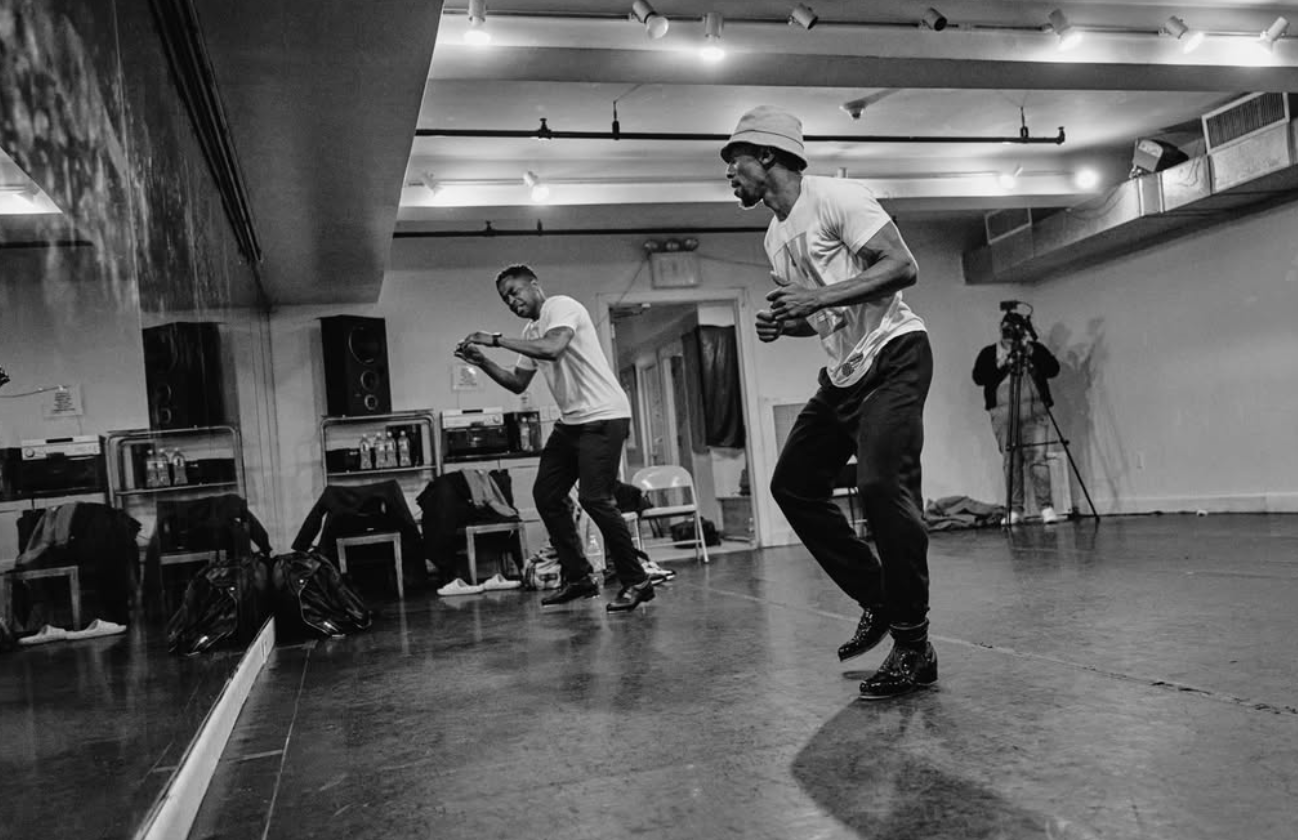
Dulé Hill and Daniel J. Watts rehearsing for Lights Out: Nat “King” Cole (Photo by Valerie Terranova)
The Company Continues
Like many nonprofit arts organizations that have the gift of rehearsal space, RRDC rents their studios, which not only serves as a source of income, but also brings community through the front door.
“We have the top floor, which we just reopened, which is the newest studio, and it has windows that look into our backyard. It’s beautiful. We have the first-floor offices and studio, which leads into our outdoor space. And then we have the downstairs studio, which is very helpful to artists because not a lot of dance studios allow for hard shoes—that’s the flamenco, tap, clogging, any type of shoes, even sometimes heels.” New York Theatre Workshop is among the many who have used this shoe-friendly studio, bringing Dulé Hill and Daniel J. Watts across the street to rehearse their show-stopping tap number for Lights Out: Nat “King” Cole during its 2024/25 season.
At one point, Rachel and I pause our conversation to chat with two dancers coming in to rehearse in the downstairs studio. I watch as she signs them in. “Have you been here before?” she asks. They have.
We continue chatting while walking through the first-floor studio, looking at some of the old photos around the room. I see the faces and hear the stories of the company’s past members, the memories of a few signature dances in the repertoire. I hear the trials and tribulations of what it takes to keep an old Manhattan building in shape, and I hear how Rachel’s own history at the company is woven into the story of these walls. We laugh after she tells me about how sometimes she’ll dig through the filing cabinet, look at an old piece of paper, and realize it’s in her handwriting from many years earlier.
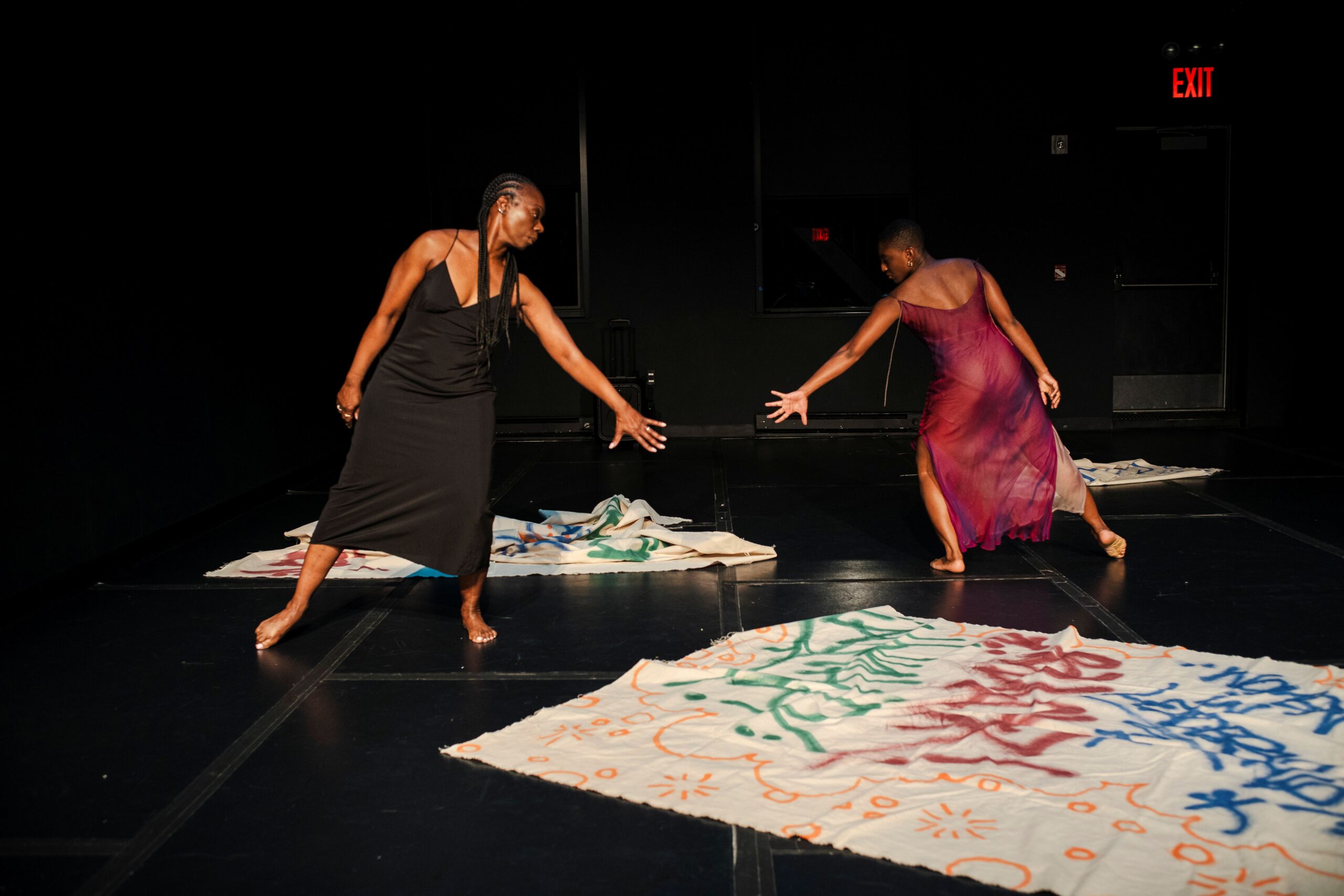
RRDC performs at NYTW’s Open Salon this past December (Photo by Marcus Middleton)
Today on E 4th St
As we begin to conclude our time together, I ask Rachel what she hopes people know about the company. She answers clearly, with the echoes of Rod’s vision: “We’re still here. We welcome everybody. We have our signature things from the past, because we’ve been around for so long, but we also have new things that we’re presenting to the public and to the community.”
This past fall, the company hosted a fundraiser in their new outdoor space and performed a piece called ‘eDANCEcipation.’ The company then shared an excerpt of the piece again just a few weeks ago, at NYTW’s open-mic style performance event, ‘Masquerade: A Night of Truth & Performance Open Salon.’
Rachel tells me about the company’s youth program, another initiative started after Rod’s passing, and about one of the young dancers on the block. “She lives right across the street. Everywhere she goes, she says, ‘I dance at Rod Rodgers Dance Company.’ That’s a true community relationship. You can’t say how good that is for a small organization to have people from young to old talk about being at Rod Rodgers.”
Whether a recurring student or a newcomer, the open doors at the company have constant activity coming through. “We’ve had people who would walk on the street, who didn’t know about us and came in,” explains Rachel. “They come for a specific class and then they find out about another class. That’s just something that makes me feel like we’re doing what we should do.”
Since our conversation, when I walk along E 4th Street on my way to the Workshop and pass the company’s brick facade, I think about all the stories just inside its doors. Mr. Rodgers’ gravitational pull in the community, and Rachel and the team’s continued dedication to his vision, represent an unwavering belief in the power of art and connection despite all circumstances.
“Rod would always say: ‘You know, you get more honeybees with honey, not vinegar, so always be nice, even when they’re not nice,’” Rachel tells me. “We just want to stay genuine and authentic to who we are and what we stand for as artists in the community. What would be the point if we don’t carry on the mission of Rod Rodgers to share his space with other artists and to use his art as social commentary?”
—
Rod Rodgers Dance Company (RRDC) is located at 62 E 4th St. You can read more about the company and support their upcoming projects, including new artistic work, building renovations, and youth programming, by visiting their website.
Explore more
Categories: Community Spotlight and For The Culture. Tags: Community Spotlight, For The Culture, Marty Chandler, Rod Rodgers Dance Company, and Tartuffe.