

 My Cart
 My Account
 Gift Certificates
 Find Us

Class is in Session: Casebook Participants on the Making of TARTUFFE
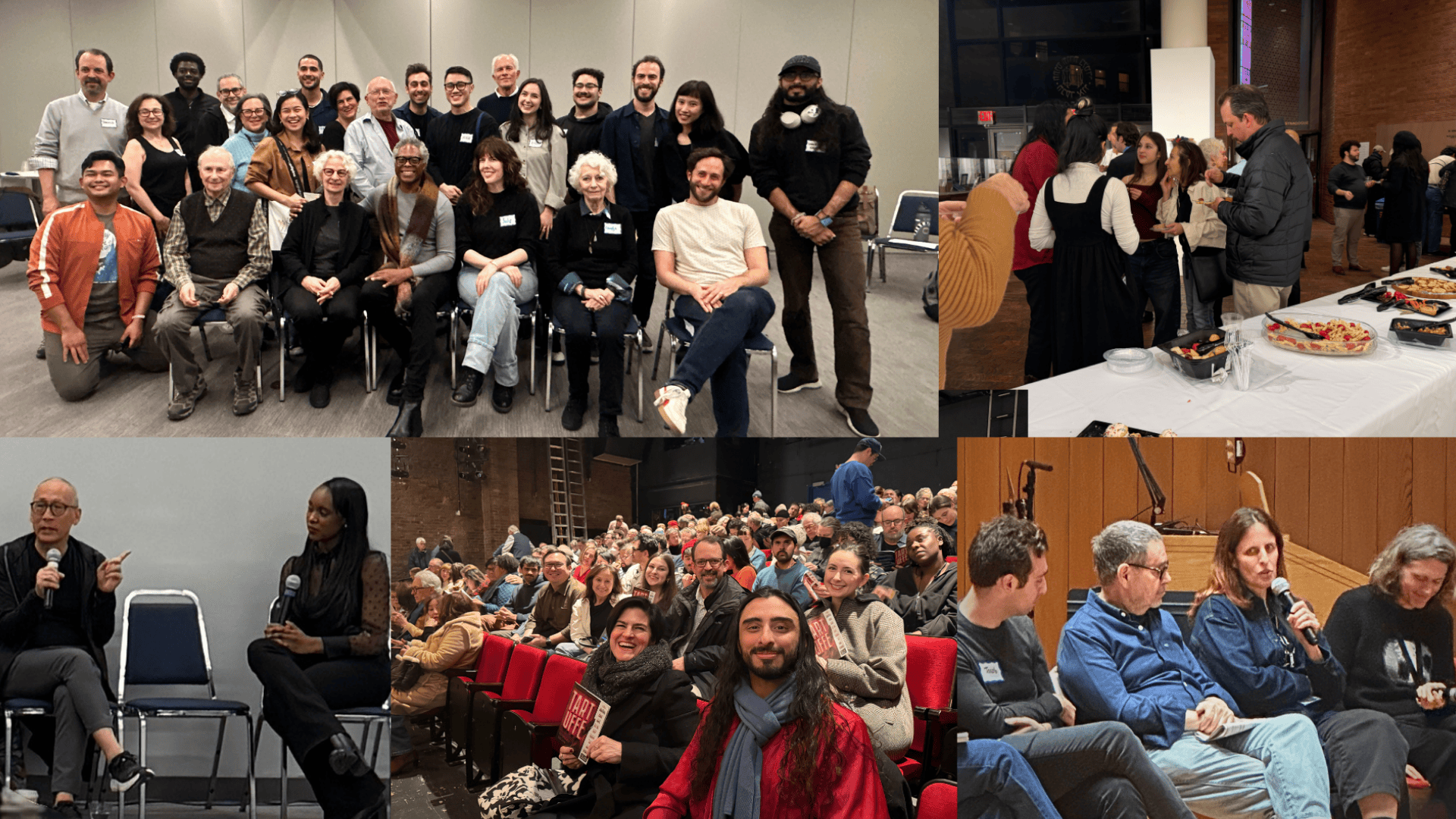
Our Casebook program pulls back the curtain on one show in the Workshop’s season each year, and this year, participants spent eight weeks taking a behind-the-scenes look at the making of TARTUFFE. From conversations with the generative artists to sitting in on tech rehearsal, Casebook participants (or “Casebookers”) learned all about what goes into taking a new work from page to stage at an Off-Broadway theatre company. NYTW Education & Engagement Associate Marty Chandler chatted with a few Casebookers to recap what Casebook covered this year and hear about their experience in the program. Let’s hear what they had to say!
—
“I love New York Theatre Workshop, and I love all the great new work that it’s brought to the fold,” said Erich McMillan-McCall, the founder of Project1Voice and now first-time Casebooker. “But what’s so great about Casebook is now you get to see that process, dissected in a way that makes it accessible for the everyday theatregoer.”
For some, Casebook for Tartuffe wasn’t their first time participating in the program.
“My first time was for Lights Out: Nat ‘King’ Cole last spring,” said Jonathan Arkay, a student currently pursuing an MFA in Dramatic Writing at NYU. “I stumbled upon it because I was really interested in seeing that show. My grandma is a huge Nat King Cole fan, so for Christmas, I got her tickets to see it.”
Then, Jonathan learned about Casebook and the All Access scholarship, which allows a handful of participants who identify as students, artists, and/or theatre lovers of diverse backgrounds to join the program for free. After doing Casebook for Lights Out through All Access, Jonathan decided, “I loved it so much I wanted to do it again regardless of what the show is.”
“I first was a member years ago, and I always thought that the work that the Workshop did was the best in New York,” said Carolyn Hearn, who has remained a long-time fan of the Workshop, having now participated in at least four Casebook programs and Mind the Gap, and is also a Repeat Defender.
Regardless of their prior experience with the Workshop, all our Casebookers dove right into the program with enthusiasm.
Each week, Casebookers discussed one aspect of the production with the Casebook team: Director of Education and Community Engagement Psacoya Guinn, Associate Artistic Director, Theatre and Productions Aaron Malkin, and Community Engagement Coordinator Maralyn Quiñones-Stead.
These conversations often featured special guests from the creative team or Workshop staff who discuss their role in bringing the show to life. In learning about what it takes to bring a production from page to stage, it’s important to start at the beginning. So as always, the first of these guests were the generative artists: playwright Lucas Hnath and director Sarah Benson, who shared the story of their collaboration as they developed this new version of the play.
“The script is the grounding element that everyone is working on at the same time,” Jonathan said. “And as you see in Casebook, everyone treats the scripts with the same respect. Everyone also understands that it’s still in process. At New York Theatre Workshop, people are very open to how theatre is a living thing.”
This year’s Casebook offered the opportunity to learn more about how artists reapproach an original text in a new version. “It was so interesting to hear Lucas and Sarah talk about the play and their vision of it as something different, said Carolyn. “To hear them talk about it and how they wanted it to be modern but still retain the rhyme and the classic elements was fascinating.”
Francis Jue, who plays Cleante, joined the next Casebook session on behalf of the cast, and answered questions about the acting in Tartuffe. Then, the following week, Casebookers had the opportunity to hear from members of the stage management and design teams. When I asked the Casebookers what surprised them most about Casebook, they mentioned how much they learned about the wig design.
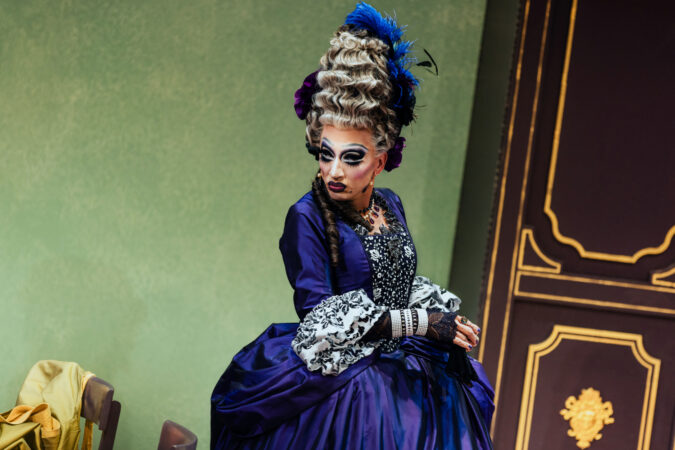
Notice the wig on Bianca Del Rio (Mme Pernelle). Want to learn more about the wigs & makeup in Tartuffe? Check out this video with designers Rob Pickens and Katie Gell! (Photo by Marc J. Franklin)
“I loved hearing the process of what a wig maker does, how tedious it is, how they are doing so much work,” Jonathan remarked. “And we don’t even think about it when we see it, because their work is that good; their goal is to not be noticed. It’s such a specific art form that we don’t really get to hear about, and this show has amazing wigs in it.”
Then, after learning about the production for the first few weeks, Casebookers observed a tech rehearsal, and came back the following week for the invited dress rehearsal. While watching these rehearsals and performances, Casebookers are thinking both consciously and subconsciously about the behind-the-scenes knowledge they have been given over the weeks prior, which allows them to see the show differently.
“Everything feels more deliberate when you’re watching it after Casebook,” Jonathan explained. “Theatre always is deliberate. It’s one of the most deliberate arts out there because it’s so specific. But I don’t think you’re as tuned into it when you’re not hearing from every person working on it.”
Carolyn loved being among the first audiences to see the play, witnessing the actors making new discoveries during dress rehearsal. “The actors’ reactions to the audience’s reactions were extraordinary. They would get a laugh that they didn’t expect. And because they are naturally funny people, they know how to raise an eyebrow and get another laugh at just the right moment.”
The humor ended up being both entertaining and a grounding, inviting aspect of the production. “I said in one of our Casebook discussions that I really was not sure how I was going to relate to Tartuffe as an African American,” Erich explained. “When I saw the invited dress, it was laugh-out-loud funny. And it just speaks to the universality of stories and the theatre, and in this moment of uncertainty, it’s nice to have the certainty of the theatre. Because the theatre does what theatre should do: it shows us ourselves and how we relate to one another.”
The last set of guest speakers Casebookers heard from were members of the NYTW Staff, including Psacoya along with Director of Development Allie Lalonde, Director of Marketing & Communications Caitlin Baird, and Producer Audra Labrosse. In this panel, each person described their department’s work to help get the production onto the stage and then to bring in communities, partner organizations, donors, and audiences to enjoy it.
“I was most impressed by this conversation,” Erich shared, “and to talk about how they go about generating the income for the theatre and about how to market the show. How do you get people to come to a show like Tartuffe? Especially when you have dueling Tartuffes. I love the fact that the Workshop decided to lean into that and I loved the article with Matthew Broderick and Andre DeShields.”
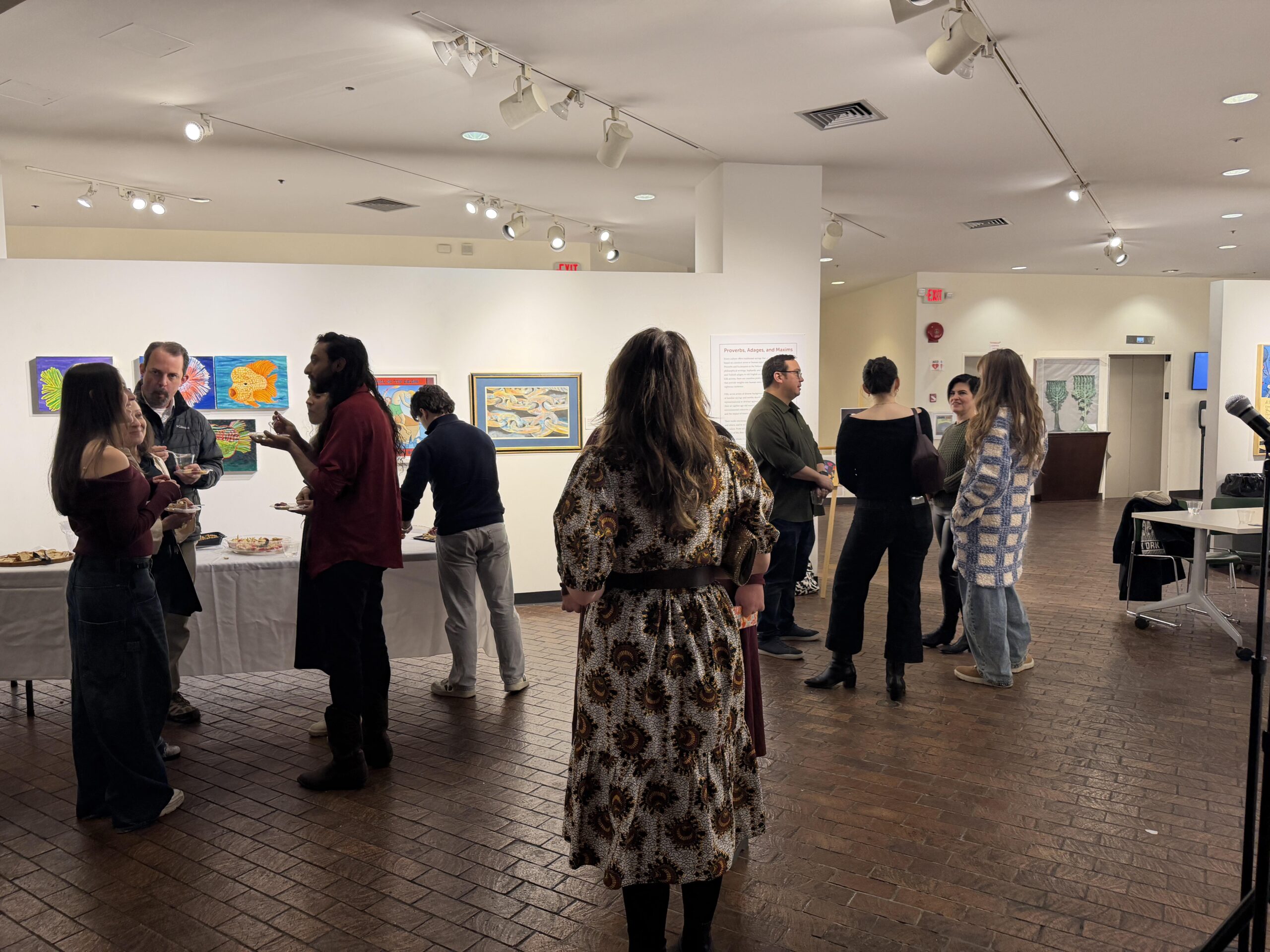
Casebookers celebrate during the Virtuous and Vicious Ball at Hebrew Union College
Casebook concluded with the full program attending one last preview performance, followed by a celebration with food, drinks, and time to be in community together. Hebrew Union College hosted this year’s party, “The Virtuous and Vicious Ball,” and graciously offered their space for each weekly session of Casebook as well, making the program even more accessible.
“Casebook, for me, has been this moment of connection, and connecting with people who love the theatre, and connecting in a way that’s not just about buying your ticket and going and seeing the show and going home,” explained Erich. He also told me about a new friendship that’s continued beyond Casebook, and we laughed together he said, “She’s also a huge theatre lover. We’ve become Casebook friends. We’re CBFs!”
When asked what they would say to someone potentially interested in participating in Casebook in the future, our Casebookers were excited to share their thoughts.
“Oh, they should do it!” Carolyn exclaimed. “They should go to every single session and just absorb it. If you have a question to ask, it’s really a safe place to ask. You get to meet people, you get to explore the function of theatre as somebody from the inside. It’s like a little doorway into the heart of theatre.”
Jonathan added from his perspective as an artist and writer himself. “Even if you think you know everything about a theatrical production process, to be a fly on the wall in one is different than actually being a part of it. It’s something that other theatres don’t offer. Take advantage of that. It’s like an educational experience that you literally won’t get anywhere else.”
“Even for someone like me-I go to the theatre a lot, and I’ve seen both sides of the table-I learned things about the theatre that I did not know,” Erich said. “No matter where you are in life, there’s always something to learn. And there’s always a way to see the world through a different lens, and that’s what Casebook does for you. It allows you to see theatre in a more complete lens.”
Carolyn left me smiling with her final thoughts, which sum up so eloquently the experience of the program: “It may not seem interesting in a tech rehearsal to watch 5 minutes over and over again, but it is! It just is. It gives you a ray that shines a ray of light on something that you would normally be in the dark about. That’s what Casebook does.”
—
Interested in participating in Casebook next season? Keep an eye out on the Casebook webpage for more information next spring/summer!
Want to see Tartuffe too? Get your tickets before it sells out! Now running until January 24th.
Explore more
Categories: 2025/26 Season, Casebook, and Education. Tags: Casebook, Education, Marty Chandler, and Tartuffe.