

 My Cart
 My Account
 Gift Certificates
 Find Us

Mind the Gap London 2026: All About Our Partnership Across the Pond
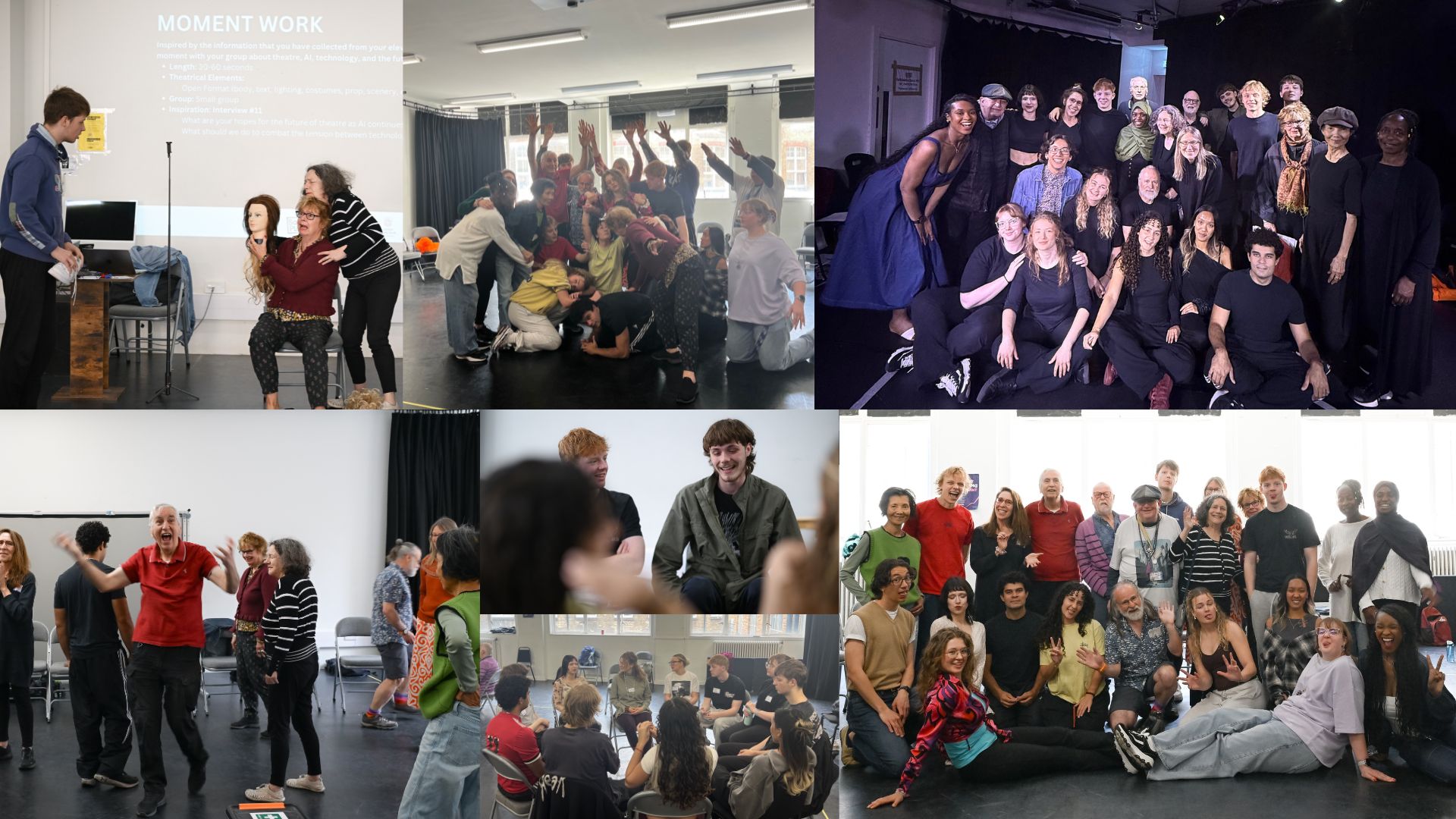
Since 2017, New York Theatre Workshop has partnered with Southwark Playhouse and London South Bank University to bring our Mind the Gap program over to London for a week of intergenerational theatremaking. Just last week, NYTW Director of Education & Engagement Psacoya Guinn and Education & Engagement Associate Marty Chandler headed across the pond to facilitate the program again this year, guiding participants through interviews and devising exercises which culminated in the group’s final ‘works-in-progress’ performance of their piece titled “Is This the Real Life?”
Amidst the busyness of the program, Marty sat down with our partner from Southwark Playhouse, Head of Participation David Workman, to reflect on the history of the partnership and the impact of the program on its participants.
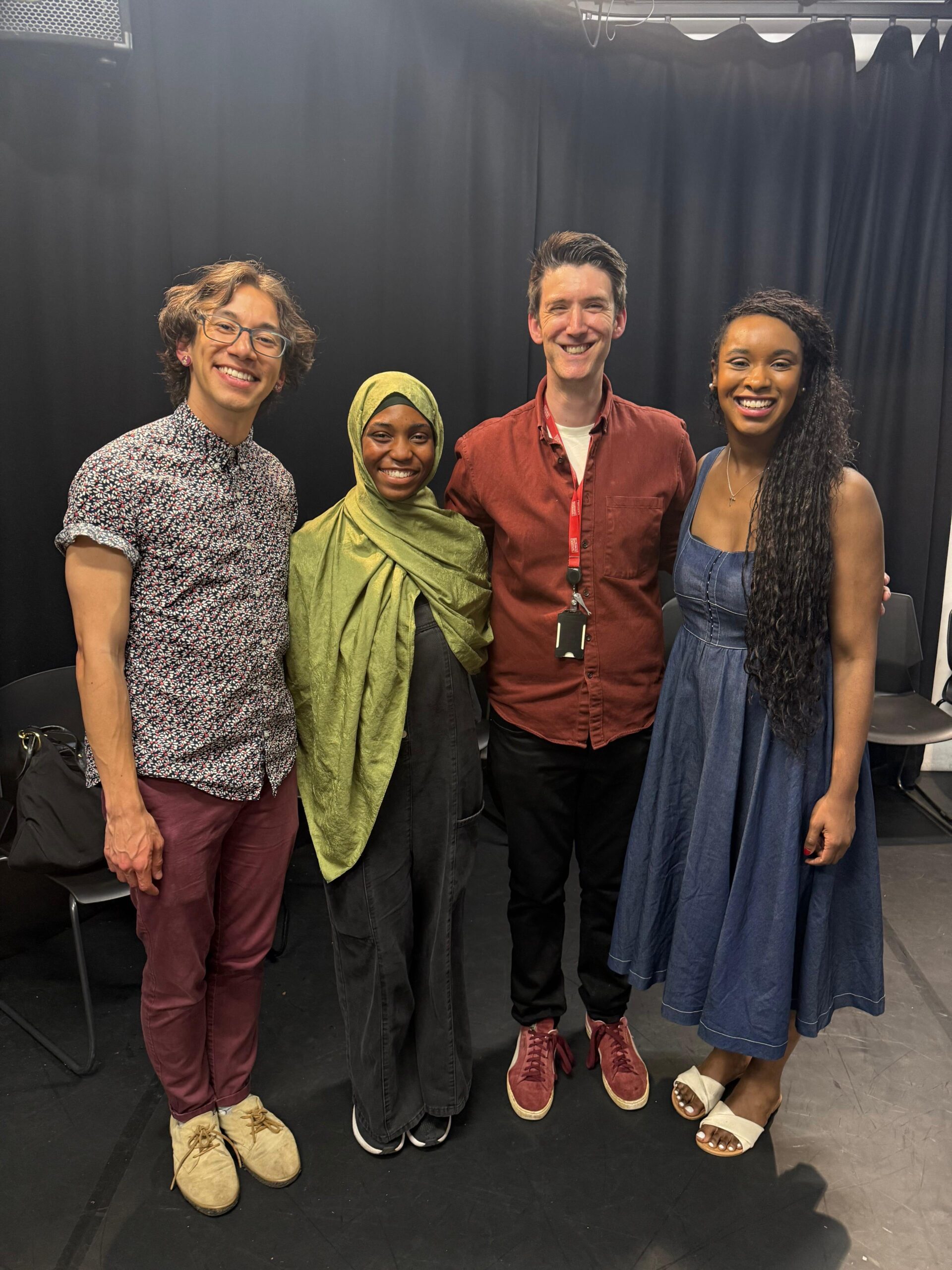
From left to right: Marty Chandler, Keji Fayemi (an Applied Theatre student from the Guildford School of Acting who assisted in the program), David Workman, & Psacoya Guinn
MARTY CHANDLER: As a way of introduction, do you mind talking a bit about yourself and your role at the Playhouse?
DAVID WORKMAN: I’m David Workman, I’m the Head of Participation at Southwark Playhouse here in South London. My role encompasses managing all our participation programs in the local community and across South London, which includes our work with older adults, who do Mind the Gap, but also young people with schools and arranged community groups. So, my role is to oversee all of those, manage and build the programs, and get loads more people involved in theatre throughout.
MARTY: What I love about this partnership is that there is such a clear parallel between the work that New York Theatre Workshop is doing and what you’re doing as well with intergenerational programming. We have a group of 21 participants, including students from London South Bank University along with elders from the Southwark Playhouse Elder Company and other groups around London, who have joined us here this week to make some theatre. This leads well back to you, David. Could you talk a little bit more about the programming you do? Psacoya and I work in “Education & Community Engagement,” which seems equivalent to “Participation”?
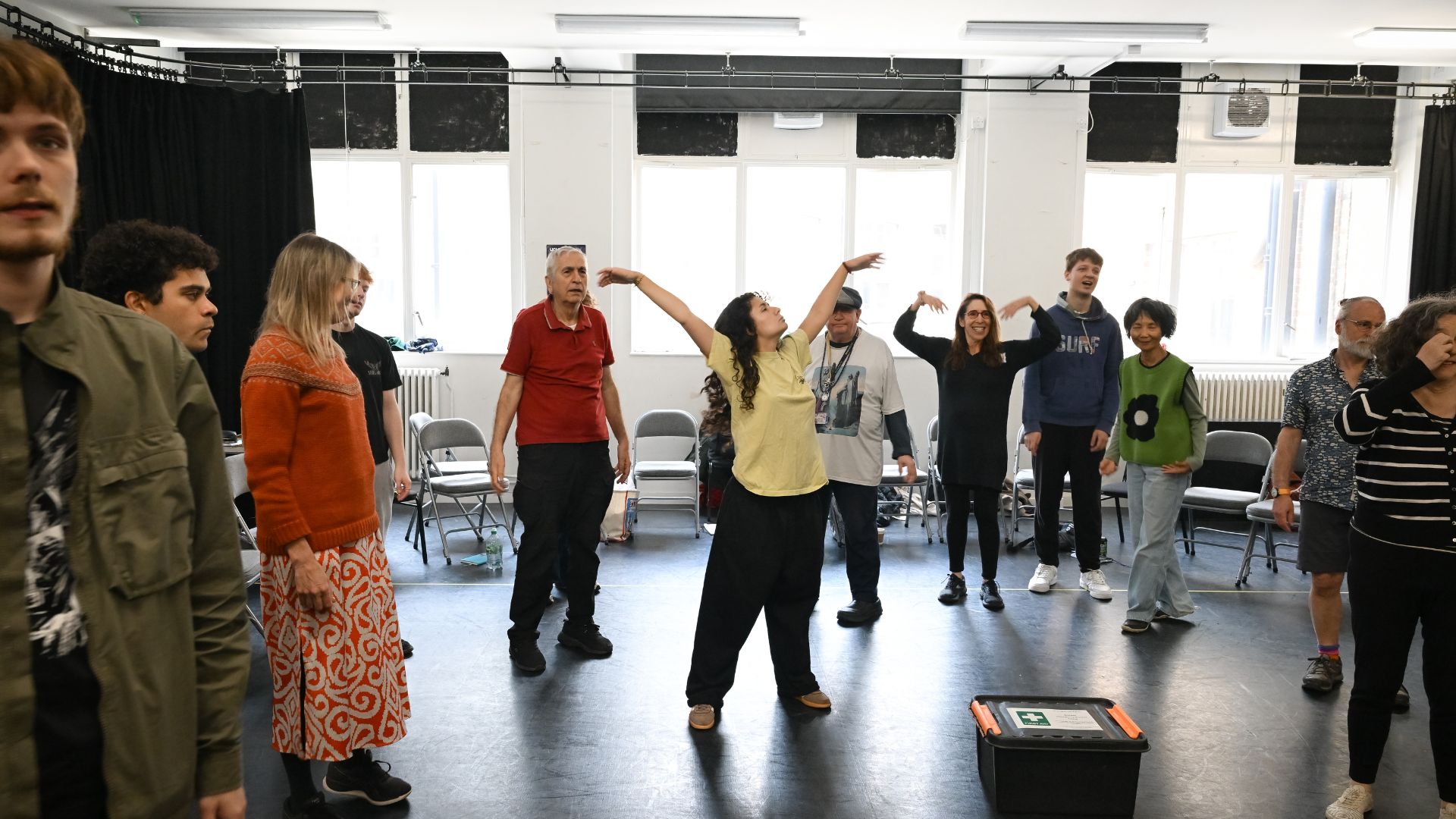
Inspired by their intergenerational interviews about topics like favorite songs or personal challenges, or bigger issues like the tension between AI and theatre, participants created Tectonic Theatre Project-style moments. (Photo by Andy Henry.)
DAVID: Even in the UK, different theatres call it different things. We call it “Participation,” because we see that the act of participating in drama and theatre is valuable. It’s the act of participating, and what you get from performing and engaging with theatre, whether that be personal development, meeting friends, personal confidence as well as all the skills you get as a performer. We aim to encourage people who haven’t necessarily had a chance to participate in the arts before, particularly young people and those who maybe haven’t had access to the work; all of our work is free as well, so that means that it’s accessible, and we engage all parts of the community.
MARTY: That’s awesome. Do you have a favorite moment or memory from your time working with these programs?
DAVID: I’ve been in my role now for nearly 11 and a half years, and so I’ve had young people who’ve gone through the program and are now working professionally in the industry; they’ve come back and said that what they took away from being part of our programs was really the support for them in their future careers. So, it’s all that—seeing a young person who joins a program when they’re 8 years old, then when they’re 18 years old and seeing the change in their ability is always powerful to me. Also, to touch on what we’re doing here, with our older people’s work, we have worked with people ages 65 and over, and there may be a participant who has done no acting since they were at school 50 years before. Seeing an older person—probably like you’ve done today—just open themselves up to exploring their own stories or engaging with other people, and seeing that connection that maybe they haven’t been able to think about for a long time, it’s always really powerful.

This year, we used ‘case studies’ to introduce the group to different methods of devised theatre. As a special treat, we brought in one of the artists we studied, Flako Jimenez from ¡Oye! Group, to Zoom in and answer participants’ questions about devising. His main message/advice to always ‘fail forward,’ became a theme and moment within the group’s final piece.
MARTY: Yes, we’ve definitely seen that, even in the room today. There are participants who we met on the first day of the program especially some elders, who came in telling us they’ve never done theatre before: they just heard about the program through you or through someone else. But they have just come to life and are taking big, bold leaps in the rehearsal room—it’s been really amazing to see.
Let’s jump back to our partnership, which goes all the way back to 2017—we’re coming up on almost 10 years together. Can you talk a little bit more about that origin story and how the relationship has sustained all these years?
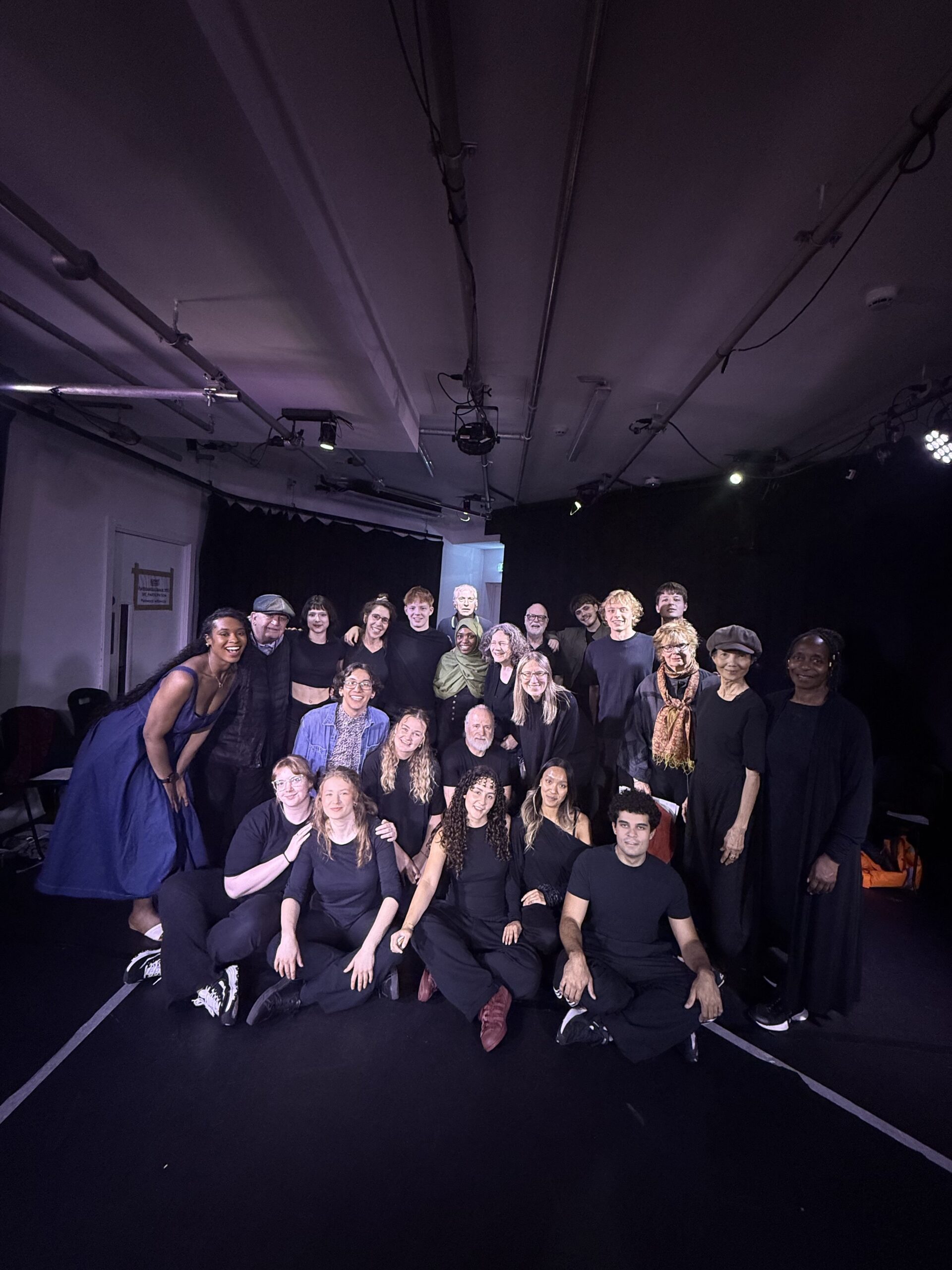
The participants just before their final performance at Southwark Playhouse’s Participation Space
DAVID: I was approached originally by Gill Foster, who is the Head of Performing Arts here at London South Bank University. They’re around the corner from the theatre, our neighbors. And she made the first contact with New York Theatre Workshop, because she visited New York and found out about the program, and she came back really excited. She reached out to me, not having met me before, asking if I would be interested in partnering with her on this, if I thought our participants would be interested. And I said yes. I wasn’t aware of the program before she talked to me about it, but it really struck me how impactful it was. We organized that as a one-off in 2017, and the impact on our older participants was incredible. They still talk about it now, nearly 10 years on. They’re still engaged, and they always like to come back and see what’s going on. Gill clearly thought it was such a really powerful project, so we wanted to do it again. I think this is the sixth time you’ve come back in 10 years. And there’s always demand—people always want to take part and always want to get involved. It’s also been great because we build a connection between the theatre [Southwark Playhouse] and the Performing Arts Department here at the University, in other respects. It’s a great community as well, outside of Mind the Gap.
MARTY: Thank you for this all, and for our partnership, David. Are there any last words you want to share with everyone?
DAVID: For me, collaboration and participation are such an important part of what we do, like how we’re collaborating here with New York Theatre Workshop with LSBU. It’s all about bringing people together and bringing skills and opportunities, and that’s what we try to do with all of our partnerships here in the UK. So, we’re just really thrilled to continue to be Minding the Gap as it were, here in the UK and hopefully for many years to come.
Learn more about Southwark Playhouse’s Participation programs including their Elders Company, the acting program at London South Bank University, and our Mind the Gap program.
This interview is an edited edition of our live conversation on the @nytw79 Instagram on June 10th, 2026. Check out the Story Highlights for more behind-the-scenes content from our Mind the Gap London Instagram takeover.
Several photos included in the header collage are by photographer Andy Henry.
Explore more
Categories: Education and Mind The Gap. Tags: Education, Marty Chandler, and Mind The Gap.